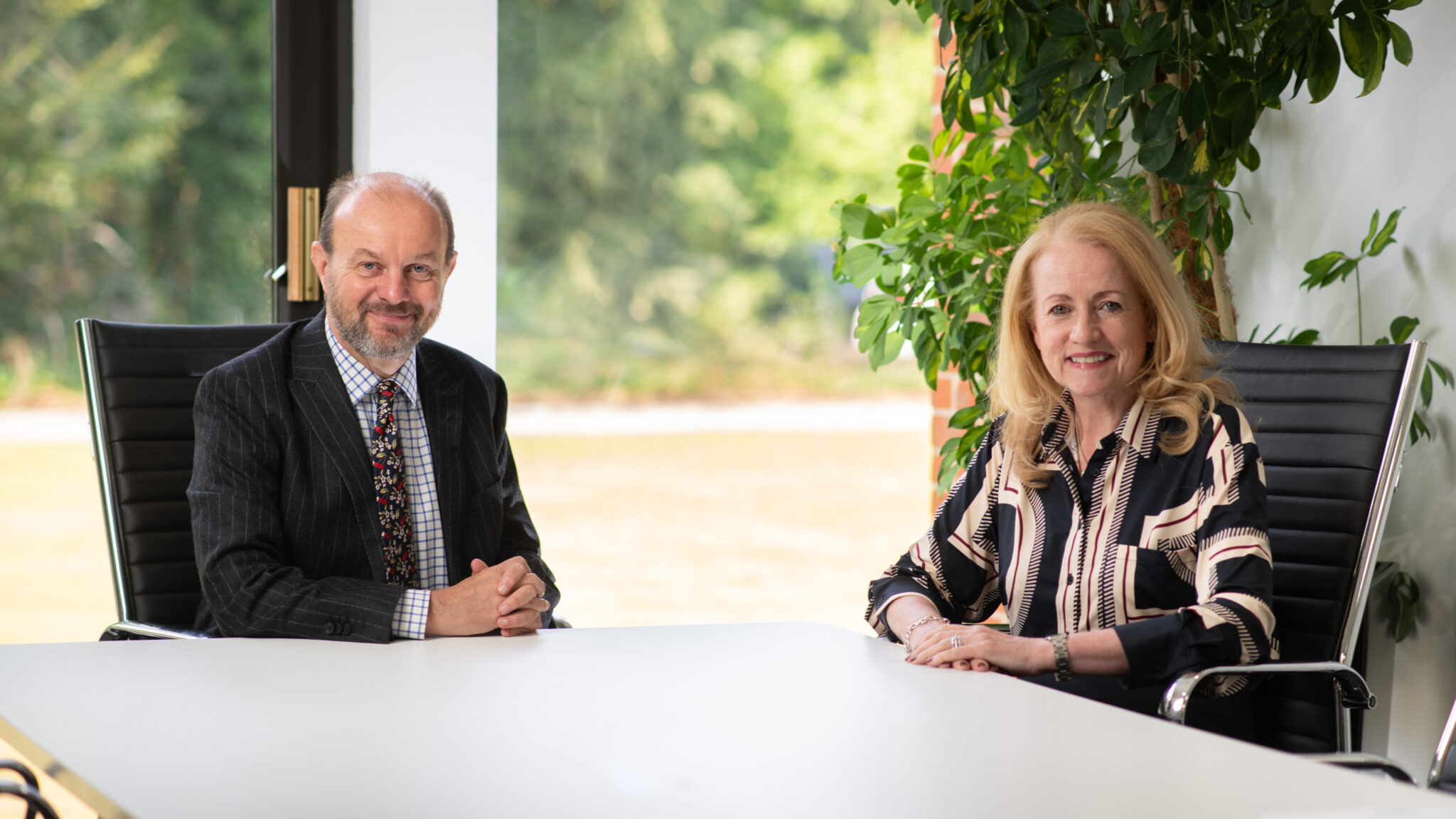
As Managing Partner of Swinburne Maddison, Jonathan Moreland has overseen a period of significant growth and change, helping transform the firm from its traditional roots into one of the North East’s most respected legal practices. But ask Jonathan what he is most proud of, and his answer is not an award or a business plan. It’s the people.
After 35 years with the firm, Jonathan is preparing to retire, handing over leadership to long-standing colleague Victoria Walton. In conversation with Lesley Fairclough, President of the Newcastle Law Society, he reflects on the evolution of the legal profession, the importance of succession planning, the value of humour and culture in the workplace, and why he believes the next generation of lawyers should be proud to be part of an honourable profession.
Looking back to when you first joined in 1991, what stands out most about those early days?
Joining my father’s firm in 1991 was my first step into the world of work and the legal profession, and it feels like a completely different world now. It was pre-tech. We had one computer in the office, used by the bookkeeper, and there was no email, internet, Google or mobile phones.
I was explaining this to one of our younger lawyers recently and he looked completely baffled. He asked me how we managed to do our jobs. The answer was simple. You looked things up in books, checked your law school notes and asked more experienced colleagues.
What I remember most is that it felt like I was joining a profession. The business side followed behind that. It was a more traditional world, but it taught me the importance of relationships, trust and learning from other people.
There are also far more women in senior leadership positions today than when I started, which is a tremendous change for the better.
Swinburne Maddison has changed significantly during your career. What do you consider to be the defining moments?
The merger in 1998 was undoubtedly one of them.
By that stage both firms were at a natural turning point. My father had retired from Swinburne Jackson & Moreland and Mike Larnach had retired from Wilson Maddison. The firms were literally two doors apart in Durham and between us we acted for many of the city’s largest clients.
More importantly, we genuinely liked and respected one another. We worked together professionally, socialised together and there was a real synergy between the two firms. The merger felt like the natural next step.
Looking back, however, the biggest challenge wasn’t the business side. It was bringing people together. We focused heavily on merging the partnerships, but probably not enough on helping everybody else feel like one firm. That took longer.
The move to Aykley Heads in 2006 was another defining moment. We were exactly the same people doing exactly the same work, but suddenly clients saw us differently. The new offices changed perceptions externally and internally.
To be fair, the offices we left behind could genuinely be described as Dickensian. The old Wilson Maddison office didn’t even have central heating. I remember suggesting that we install some and being called a “wimp” for raising the idea. So moving to an office with central heating and plumbing that actually worked felt like a considerable step forward.
The move gave us confidence and helped reinforce the idea that we were becoming a modern commercial law firm whilst retaining the values that had made us successful in the first place.
How has the firm’s approach to marketing and branding changed over the years?
Massively.
Immediately after the merger in 1998, the four partners did everything themselves, including the branding and marketing. Looking back, that’s probably why it was such a shambles.
I remember having different fonts on letterheads, business cards and adverts. There was no consistency whatsoever. Like many firms at the time, we tried to do everything ourselves.
One of the biggest changes over the years has been recognising the value of bringing in specialists. We realised that lawyers shouldn’t necessarily be designing brands any more than marketers should be drafting legal documents. Investing in proper marketing support helped us present ourselves more professionally and better communicate who we are as a firm.
Looking back, how important was dispute resolution in preparing you to become Managing Partner?
One of the biggest advantages was simply knowing the firm inside out. After spending so many years here, I understood what made the firm work and, more importantly, what made the people within it tick.
Working in dispute resolution and employment law probably does equip you with some useful skills because lawyers are, by nature, opinionated people with strong views. That’s not a criticism. It’s one of the reasons they are good lawyers. But it does mean leadership sometimes involves bringing different perspectives together and helping people find common ground.
What surprised me most was that managing a department is completely different from managing an entire firm. I thought it would be a natural progression, but it turned out to be a very different role. That said, the ability to listen, communicate and resolve issues constructively has certainly been useful throughout my time as Managing Partner.
Leading the firm through COVID must have been one of the biggest challenges of your career. What stands out when you look back?
It’s easy to forget now how uncertain and frightening that period felt.
The immediate priority was keeping the business running and ensuring clients continued to receive the support they needed whilst helping our people adapt to working from home almost overnight.
What concerned me just as much, however, was culture. You can spend years building a culture and then can lose it very quickly when everybody is suddenly isolated.
We worked hard to stay connected as one firm and to support people through what, for many, was a very difficult personal period. Everyone had different challenges, whether that was caring responsibilities, home schooling, worries about family members or simply coping with uncertainty.
Looking back, I think the firm’s response demonstrated just how strong our culture really was.
You’ve often spoken about the importance of the firm’s culture. Why has that mattered so much to you?
As the firm’s headcount has grown by around 35% in recent years, maintaining our culture has become more important than ever.
I’ve always worried about departments becoming separate firms under one roof. Culture is hard to build and very easy to lose.
One of the things I feel strongly about is creating a genuine sense of belonging. People want to belong to something. They want to feel part of a team and part of a shared purpose.
There is also a commercial benefit. People naturally collaborate with people they know and trust. But beyond that, I’ve always wanted Swinburne Maddison to feel like one firm rather than a collection of different departments.
When people feel connected to each other, clients receive a better service and colleagues enjoy coming to work. That’s incredibly important.
How do you view developments such as artificial intelligence?
The pace of technological change has been extraordinary. AI is undoubtedly going to have a huge impact on the legal profession and we’re already seeing that.
Like any new technology, it brings opportunities and risks. We’ve seen examples of firms being criticised, and even fined, for relying on AI-generated material that simply wasn’t accurate. AI can produce convincing answers, but that doesn’t mean they’re always right.
One of our partners recently described AI as being like a very capable junior assistant. It can produce a really useful first draft and save a lot of time, but the work still needs to be checked, reviewed and challenged. Ultimately, responsibility sits with the lawyer, not the technology.
I’m excited by the opportunities AI presents, but I think we need to embrace it sensibly. Professional judgement, experience and human relationships will always matter.
What has made you most proud during your career?
It’s impossible to choose just one thing.
The biggest honour was being asked to become Managing Partner. This place runs in my blood and being trusted with that responsibility meant a great deal to me.
But when I think about what makes me proud, it’s the people. If we have an all-staff meeting and I look around the room, I see talented, intelligent and ambitious people who are also genuinely lovely people.
Watching individuals develop their careers, grow in confidence and take on leadership roles of their own has been incredibly rewarding. That is probably the greatest source of pride for me.
Victoria Walton takes over as Managing Partner in January. Why was a smooth internal succession so important to you?
Any change in leadership is unsettling. That’s true in any organisation.
One of the reasons I’m so pleased that Victoria is taking over is that the firm couldn’t be in better hands. People know her, trust her and respect her. She’s developed her career here and understands the firm inside out.
I honestly think it would have been an enormous gamble to bring in say, an external chief executive that nobody knew. That level of change could have created uncertainty when what the firm really needs is continuity, stability and confidence.
Victoria will absolutely do things differently to me, and that’s a good thing. One of the benefits of retirement is that new leaders bring fresh ideas and different perspectives. But we share the same core values and the same commitment to our people and our clients.
I’m genuinely excited to see where she takes the firm next and I know many people within the legal community are looking forward to working with her in her new role.
The firm’s recognition for Rising Stars and Next Generation Partners reflects a strong commitment to developing future leaders. Why has that always been important to you?
I’ve learned the importance of succession from others. My father was passionate about it, as were many of the partners I worked alongside throughout my career.
The thing that strikes me is how quickly time passes. I still feel like I’m 25. I may not look it, but I do. Which is why retirement feels slightly surreal.
Life moves incredibly fast and one of the biggest mistakes leaders can make is assuming they’ve got plenty of time to think about the future.
Succession isn’t simply about replacing people. It’s about showing younger colleagues how much they’re valued. It’s telling them that they have a future here and helping them develop long before partnership conversations begin.
The greatest satisfaction comes from seeing people fulfil that potential. I think about Victoria Walton, Kate Stephenson, Martyn Tennant and David Low. We gave them training contracts and opportunities early in their careers and today they are helping lead the firm.
That’s why succession has always mattered so much to me. If you only deal with issues when they arrive on your desk, you’re already too late. You have to think ahead and create opportunities for the next generation.
Throughout your career, you’ve been a strong supporter of Durham’s legal community and the Law Society. What has that meant to you?
One of the things I’ve always valued about practising in Durham is the strength of the local legal community.
People often assume that firms are fiercely competitive with one another and, of course, there is healthy competition, but when we come together there is also a huge amount of mutual respect and collaboration.
We’ve all got the same problems, just on different scales. That’s why organisations such as the Law Society are so important. They bring people together, encourage collaboration and remind us that we’re part of something bigger than our individual firms.
It’s also important for the next generation. If young people can’t see role models within the profession, it’s difficult for them to picture themselves following that path. We have to make the profession attractive and demonstrate the opportunities it offers.
As the Law Society celebrates its bicentenary, it’s a timely reminder that whilst the profession continues to evolve, the values at its heart remain just as important.
Durham has a fantastic legal community and I’ve always been incredibly proud that Swinburne Maddison has been part of it. We might not be the biggest firm in the North East, but we’ve been able to compete alongside firms many times our size whilst staying true to our values.
What will you miss most when you retire?
Without question, the people and the humour.
One thing I’ve always tried to be is approachable. Whether it’s a partner or someone in their first week at the firm, I’ve always enjoyed hearing how people are getting on and what they’ve been up to.
If you lose the humorous side of your work, I think that’s a real mistake. Work should be enjoyable. There should be friendship, conversation and a little bit of mischief.
More than anything, it’s those daily conversations that I will miss.
And finally, what do you hope your legacy will be?
I want to see the firm continue to thrive, grow and evolve.
One thing I’m particularly looking forward to in retirement is being able to watch from afar and see what the firm achieves next. I want to look on with pride and see it succeed.
My father once said to me about retirement, “when you get out of the pool, you don’t want to leave a ripple.”
That’s something I’ve always remembered. I’ve tried to ensure a seamless transition so that the firm simply carries on, providing the same excellent service to clients and opportunities for its people.
I feel like I joined a profession all those years ago and, in some ways, I’m leaving a business. I think it’s important that we don’t lose sight of the fact that law is an honourable profession and one that people should feel proud to be part of.
If I’ve helped create a firm where people can build successful careers, support each other and enjoy what they do, then I’ll be very happy indeed.

